I'm going to provide you with a list of words and I want you to tell me which of these things are alive, and which are not. Okay, here it is: dog, rock, people. If you selected "dog" and "people" you're right. I bet that question was too easy for you.
Why did you classify "dog" and "people" as alive, but not "rock"? What have you observed dogs and people doing that makes you think they are living? We know that dogs and people can make themselves move, and that they eat food and drink water. We also know that dogs and people breathe air in and out using their nose and mouth, and that they will grow. Using these facts, we can create a list of activities that something needs to do in order to be considered alive. Our list is: move freely, eat nutrients, breath, and grow. Since rocks don't do any of the activities listed, they must not be alive.
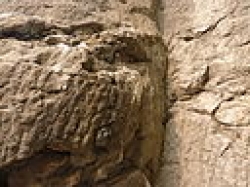
Rock - not so alive
User:Vmenkov, CC BY-SA 3.0 , via Wikimedia Commons
Does something that is alive need to perform all of those activities on your list? Infants and young babies, people who are paralyzed, and plants can't move to where they would like to go, but I'm sure that you would consider them alive. Therefore, we need to construct a new list of words to describe something that is alive. Our revised list now only includes the phrases: eat nutrients, breathe, and grow.
Nutrients provide plants and animals with the energy they need to grow, remain alive, move around, and think. When you are hungry you might feel lazy, lethargic, or unwilling to move. You may even feel cranky if someone asks you to do something, like if your mom asks you to clean your room. That is because you do not have an adequate supply of available energy to perform those activities.
Trees and flowers definitely grow, but do they eat food and drink water in order to obtain energy? Sort of. Plants do not have mouths, so instead they absorb water and other minerals that they need from the soil. The water and minerals that plants absorb help them produce their own energy.
How do plants absorb water and minerals? The next time you take a shower or wash the dishes, place a dry sponge at the bottom of the tub or sink. At the end of the shower, or when you are done cleaning, you will observe that the sponge has absorbed water. This process happens passively, which means that the sponge does not need to move or use energy to absorb water. The roots of plants work in a similar manner. Plants can then use the water and minerals that they absorb to produce the energy they need to grow.
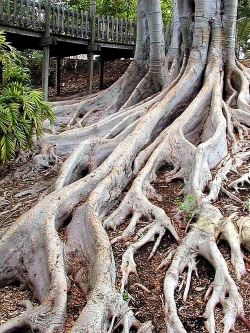
Roots are thirsty
Jon Sullivan, Public domain, via Wikimedia Commons
Next let's discuss breathing. People and animals use their noses and mouths to breathe in air. However, since plants do not have a nose or mouth, they must use another method for moving air in and out. Underneath plant leaves are very, very small holes called stomata. Air will move in and out of the plant through the stomata.
Not everything alive breathes, though. There are living things at the bottom of the ocean that live near underwater volcanoes. The water there is so hot that people would die if they swam up to these living things. These creatures don't use the same gases that plants or animals need to stay alive, but they use some of the energy from the heat of the magma to get the energy they need to stay alive. In fact, it's nearly impossible to define what it means to be alive. Scientists have recently discovered new forms of life that only survive in environments of extreme acidity or heat. We think that some of what it takes to be living means you require energy, work to stay alive, and that you grow.
Now we have decided that in order for something to be considered alive, it needs to use energy, work to keep itself alive, and grow. Therefore, we can then say that if something does not need energy, work to keep itself alive, or grow, it is not alive. A rock does not require energy, it does nothing to protect itself, and it won't grow, no matter how much you try to feed it. We can call things that are not alive non-living things.
Scientists call anything that is living an organism. Therefore, animals, plants, and people are all considered organisms. The next time you hear a dog barking, you can think to yourself "The organism is barking." You could even tell your friends that you "hear an organism barking" in order to impress them.
All organisms are made up of small pieces called cells. You can think of the whole puzzle as the organism, and all of the individual puzzle pieces as cells. Just like in a puzzle, the individual cells fit and work together to make the larger, bigger structure. That structure is the organism. Since you are an organism, you are made up of cells. However, just like the stomata underneath leaves, your cells are very tiny, and much too small to be seen without using a microscope.
When you think of examples of organisms, you might only think of plants and animals. There are, however, other living things in the environment that scientists don't classify as part of the plant or animal kingdoms. For example, a mushroom is not considered to be a plant; scientists classify mushrooms as a fungus. Other examples of fungi (the plural of fungus) include mold and mildew. Fungi flourish in very wet, moist environments. You might even find mildew growing in your shower if it isn't cleaned often enough!
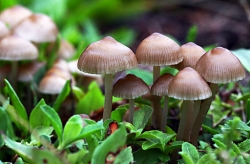
There's a fungus among us
https://www.flickr.com/photos/calliope, CC BY 2.0 , via Wikimedia Commons
Bacteria is another example of an organism that cannot be classified as either a plant or an animal. Bacteria are so tiny that they can only be seen with a microscope. And bacteria live everywhere! You can find them on the floor, in the dirt, on food, inside of our intestines, and on our skin. Most bacteria are harmless, but there are some types that could make humans really sick. Strep throat is an example of an illness that is caused by bacteria.
Even though these bacteria could harm humans, there are some types of bacteria that work to help and protect us! For example, the bacteria that live in our intestines help us digest the food we eat into teeny, tiny pieces. Our skin is also covered in good bacteria. It may seem weird that bacteria are covering your skin, but any space that is taken up by good bacteria means there is less space for the bad bacteria. It's kind of like being with all of your friends at school; when you and your friends are sitting together at a table, there is no room for mean people to sit down and bully you.
You may now be thinking that anything that makes you sick must be an organism. That is incorrect. A virus is not considered living or an organism, but it can make you anywhere from mildly to extremely ill. A virus is considered non-living because it can't reproduce itself without the help of the organism it is invading. Humans can have babies, dogs can have puppies, and apple trees can spread their seeds to make new apple trees; all of these organisms can reproduce. However, the only way that viruses can reproduce is if they go into a cell and take over, forcing the cell to make new viruses. It's like when a ship is taken over by pirates, and the pirates force the people on the ship to work for them. The common cold, chicken pox, and measles are all examples of diseases caused by a virus.

Achoooooo
mcfarlandmo, CC BY 2.0 , via Wikimedia Commons
All cells do not look the same or do the same activities. Instead, there is a division of labor. For example, does everyone in a school do homework, teach, serve lunch, and drive the bus? No, of course not. Everyone has a different job or task. In a school, students do homework, teachers teach, the cafeteria staff serves lunch, and the bus driver drives the bus. When there is a division of labor, each person can put all of their energy and time into doing their particular job. You might not do as well on your homework if you had to spend a considerable amount of your time serving lunch or driving the bus.
Just like in the school example, your body operates by a division of labor. Each task is given to a specific organ: the heart pumps the blood, the lungs bring air in and out of the body, and the brain controls conscience and unconscious activities and thoughts. Since each of these organs has a different function, they need to be composed of different cells. Each organ's cells are slightly different because they need to complete different tasks, but they are still called cells. Similarly, even though people can be tall or short, funny or serious, we still call all of them people.
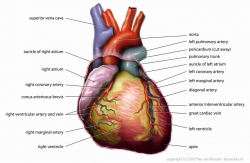
Ya gotta have heart
Tvanbr, Public domain, via Wikimedia Commons
Let's review what we have learned today. We learned that almost all living things breathe, grow, need energy, and can reproduce. There are a few organisms that do not breathe, but we can discuss those later. We also learned that all living things are called organisms, and that all organisms are made up of very tiny cells. Finally, we learned that there are many different types of cells, and that they all have a different function in our body.